



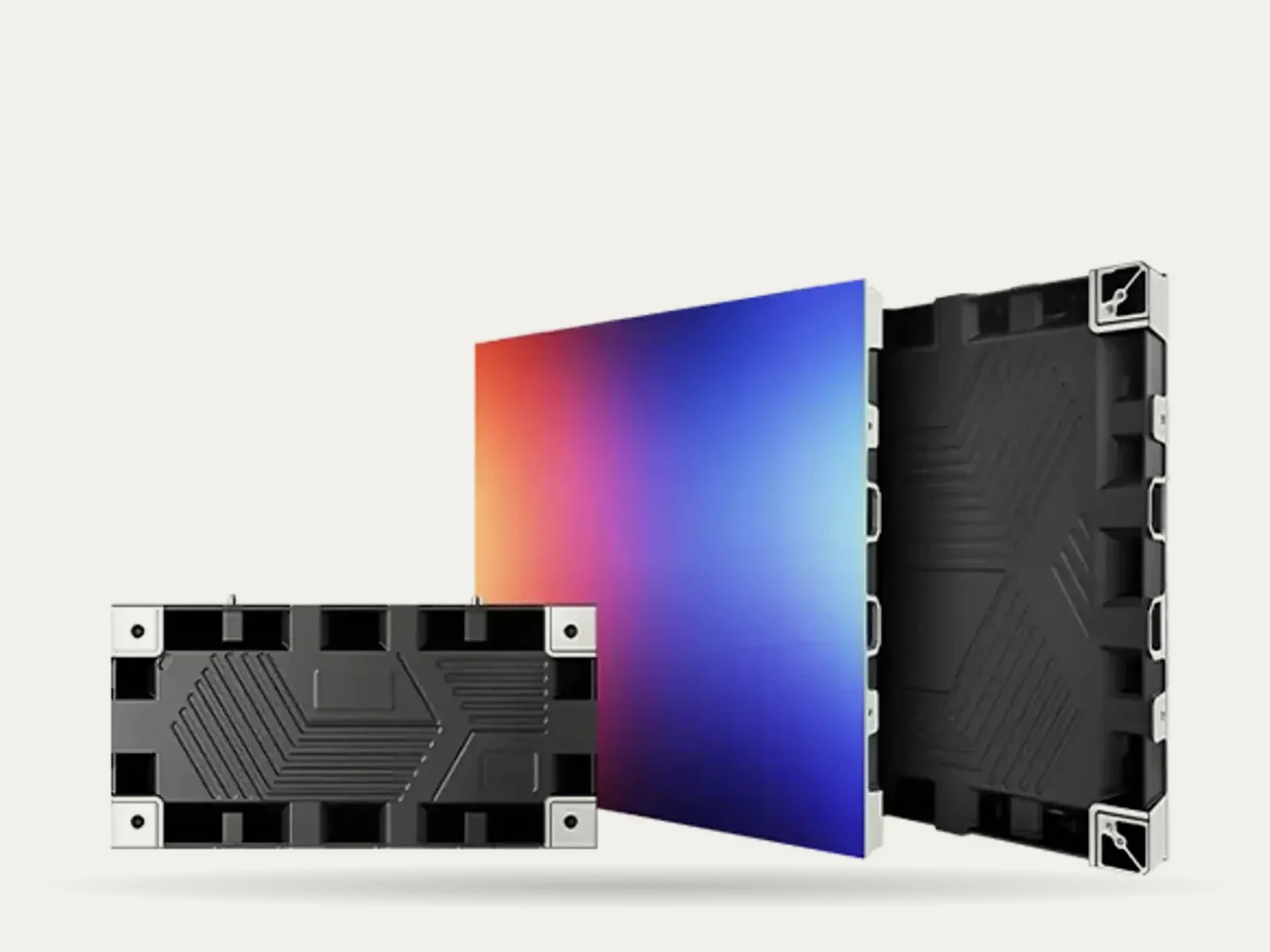
 Indoor LED wallsAn image that fills the whole room. Fixed-mounted LED walls turn foyer, shop and hall into a stage for your content, with 0.93 to 4 mm pixel pitch.
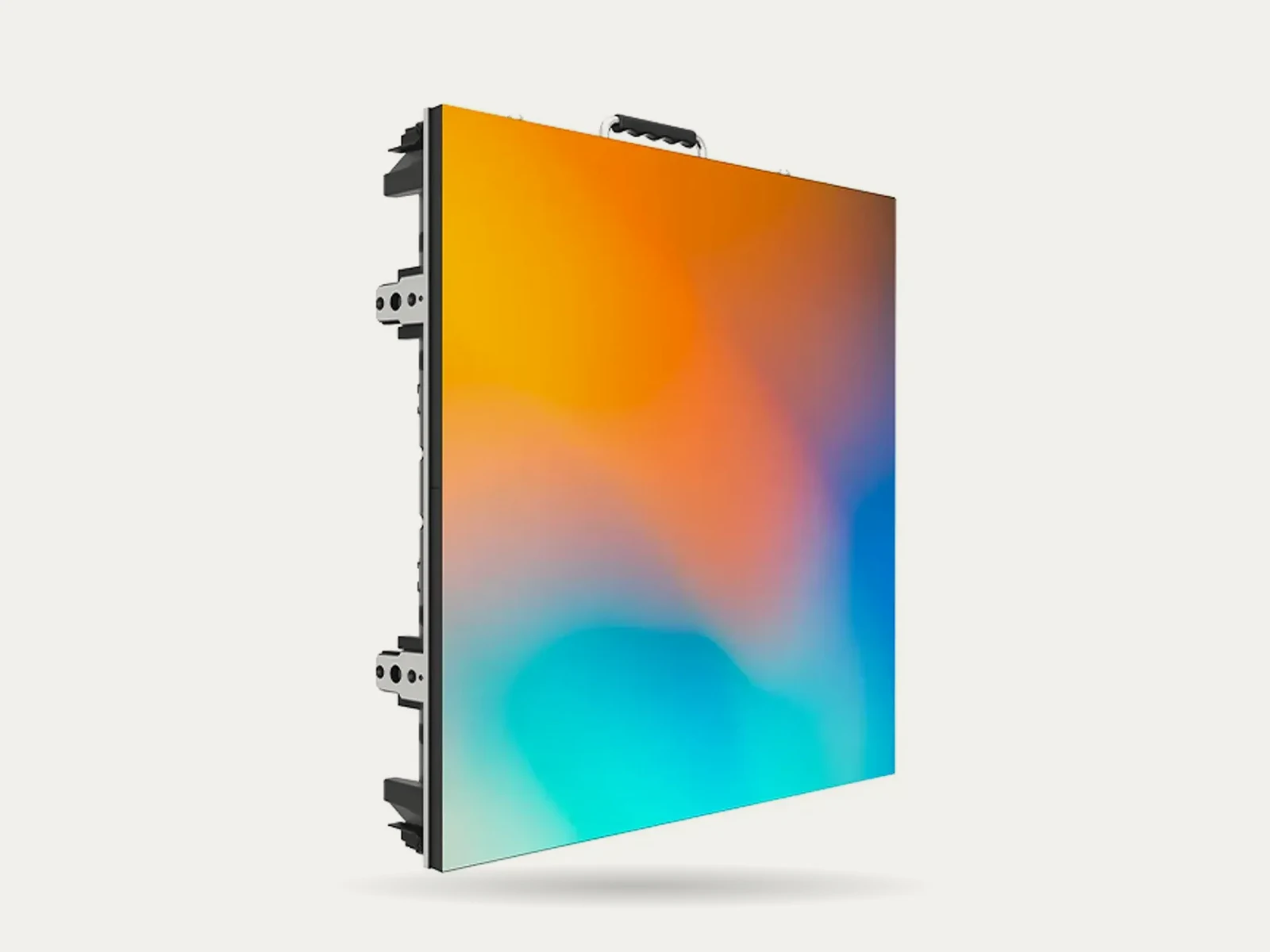 Rental & stage LEDQuickly set up, quickly gone again – and in between a large image for trade fair, concert and company party. Lightweight cabinets with quick-lock, many also for outdoors.




Why used LED walls differ from used TVs
An LED wall consists of many modules that must match. LEDs age differently depending on operating time and brightness. A module that has shown a bright logo for years looks different afterwards from its neighbour. If a new module is inserted later, it often stands out as a patch because it is brighter or has a different colour.
Then there is the control system. Receiving cards, firmware and configuration must match the sender. Without this data, even commissioning can become difficult.
Used versus new
| Feature | used LED wall | new LED wall |
|---|---|---|
| Purchase | lower | higher |
| Condition of the LEDs | unknown operating hours | new, same batch |
| Replacement modules | often scarce or missing | can be ordered from the same batch |
| Control and data | not always complete | complete, documented |
| Technology | often an older generation | current generation |
| Warranty | often limited or excluded | governed by law or contract |
| Conformity | Documents often missing | CE declaration of conformity |
The checklist before you buy
1. See it yourself, in operation. Have the wall run full-surface in white, red, green, blue and a medium grey. That way you see dead pixels, dark modules and colour differences. Also check at heavily dimmed brightness, because weaknesses show up there first.
2. Count the spare modules. Ask how many modules from the same batch are included. Without a reserve, a single defect can leave the wall permanently patchy.
3. Is the control complete? Sender, receiving cards, power supplies, cables and the configuration file belong with it. Ask for the type and firmware.
4. Calibration data. If the wall has been calibrated, the data should come with it.
5. Origin and use. Rental walls have often been assembled and dismantled. Look for damaged corners, connectors and locks. Check outdoor walls for moisture, corrosion and the condition of the seals.
6. Documents. CE declaration of conformity, datasheets and, if available, maintenance records. Without documents, insurance and approval become difficult.
7. Does it suit your location? pixel pitch, brightness and cabinet format must suit viewing distance, light and mounting surface. A cheap wall with the wrong pitch stays the wrong wall. Check it with the LED wall calculator .
When what fits
Used can work if …
- the wall is intended for temporary use or a trial run
- enough spare modules from the same batch are included
- control, data and documents are complete
- you have seen the wall in operation before buying
New makes more sense if …
- the wall is to run for many years in continuous operation
- it is part of a brand presence and must look uniform
- approval, insurance or a tender require complete documents
- service and spare parts are to be secured for years
What speaks against it
Not every used LED wall is a bad purchase. Well-maintained rental systems with a complete reserve in particular can be a solid way in. But the condition of the LEDs can only be partly seen from the outside, and operating hours are rarely documented. In a purchase between businesses, the warranty is often limited or excluded. Get in writing what applies.
If you only want to bridge one event or one season, renting is often the simpler solution: Rent LED wall.
Our recommendation
We advise on a brand-independent basis. If you have an offer for a used wall, you can have it compared with a new solution for the same location. What a new wall costs per m² is shown under What does an LED wall cost?. Everything on buying new can be found under Buy LED wall, spare parts under LED modules & accessories.