

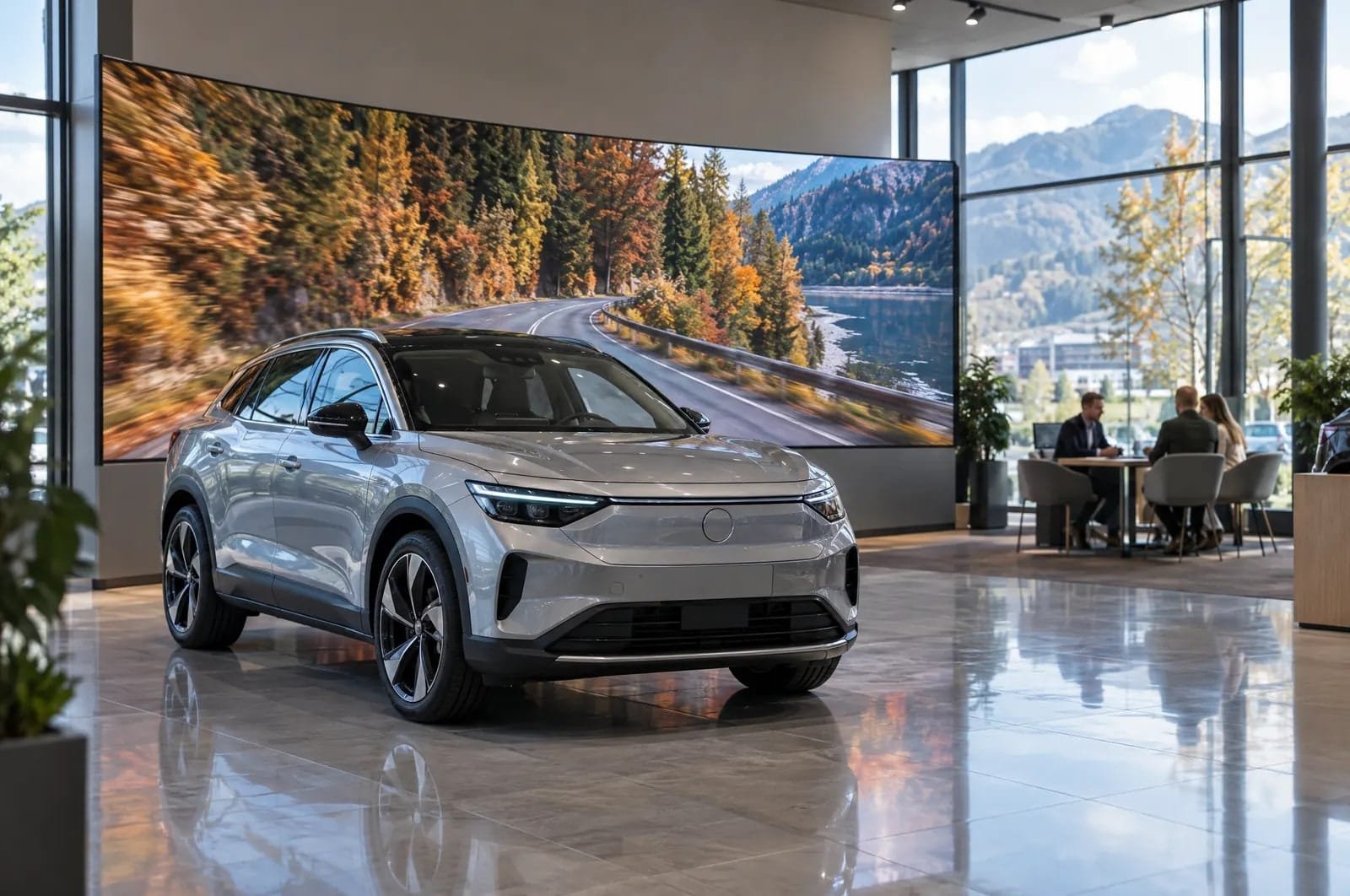

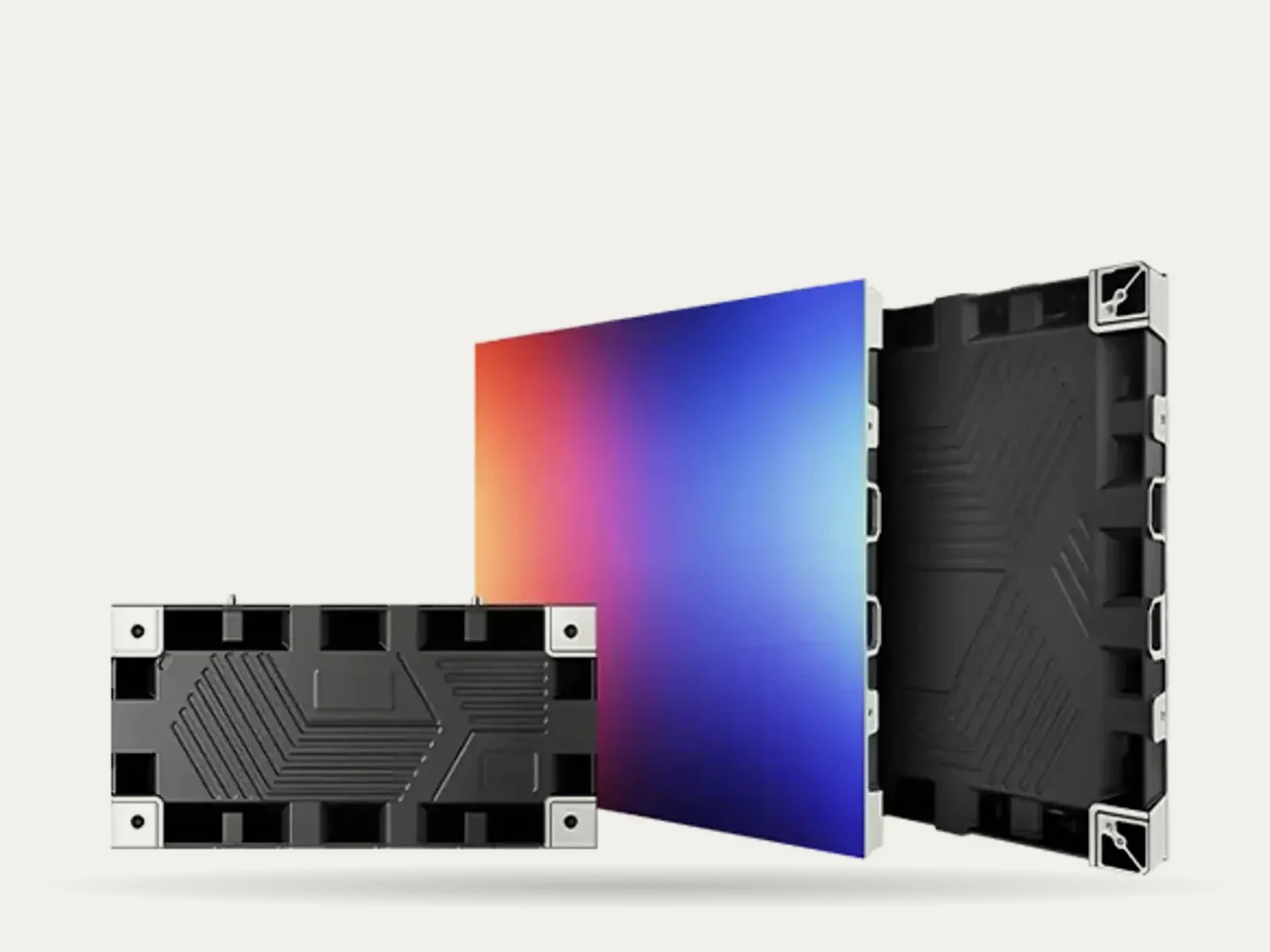
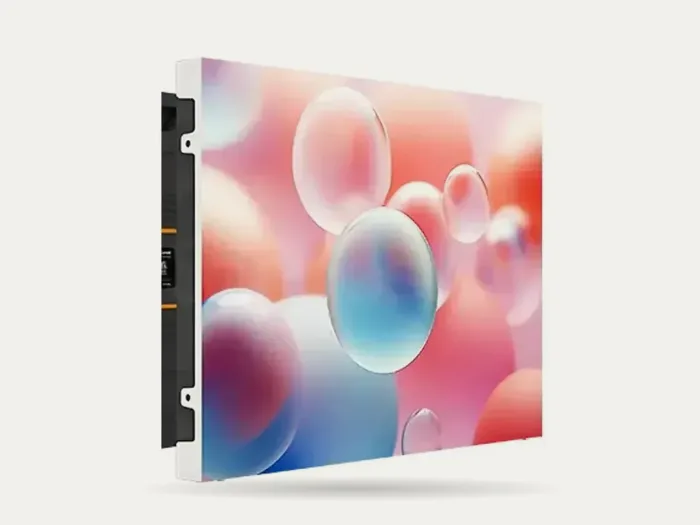
 Indoor LED wallsAn image that fills the whole room. Fixed-mounted LED walls turn foyer, shop and hall into a stage for your content, with 0.93 to 4 mm pixel pitch.
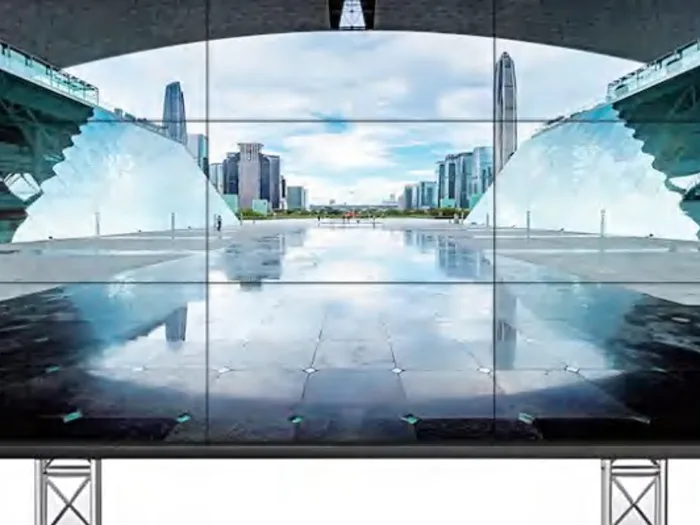
 LCD video wallWhen one screen is not enough. LCD panels with 0.88 or 3.5 mm bezel width, assembled into large images for control rooms, reception areas and shop premises.


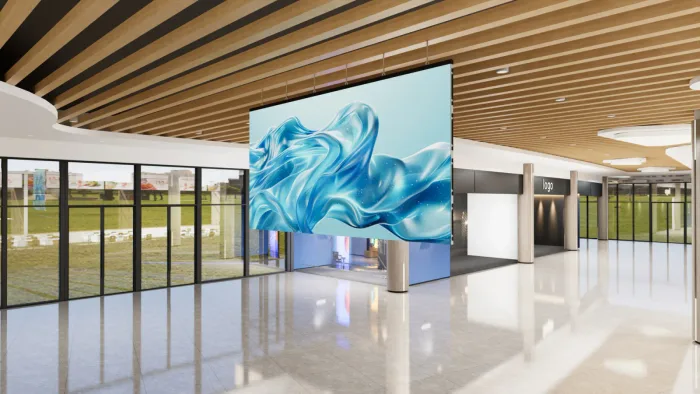


Two technologies, one goal
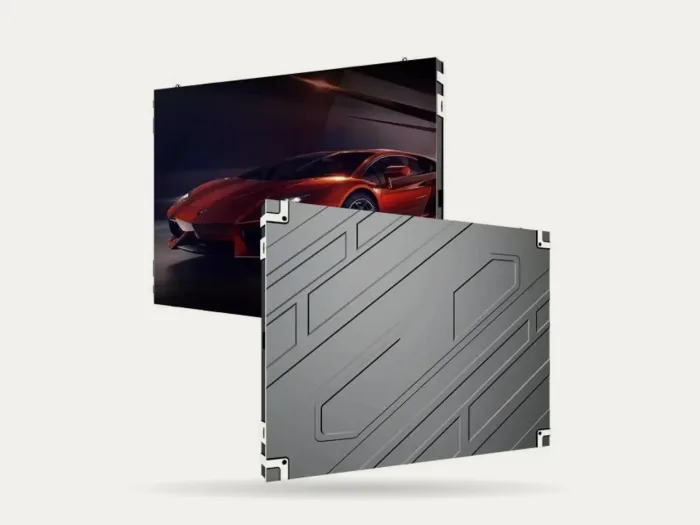
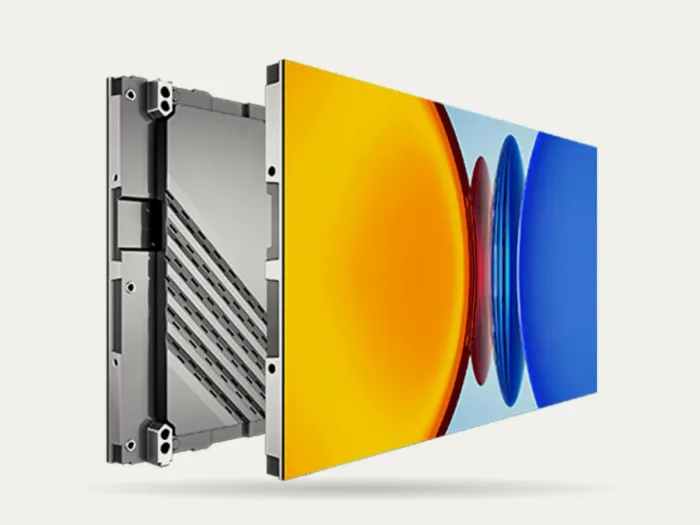
Both turn many individual parts into one large image. With the LED wall each pixel is its own light-emitting diode. The modules sit in cabinets that are joined into a continuous surface. With the LCD video wall several large flat-panel screens hang side by side, usually 46 to 55 inches. Each display has a narrow edge. Where two edges meet, a seam appears.
What is better is decided not by the technology but by your space: How close do people stand? How bright is it? And how important is an image without lines?
The comparison
| Feature | LED wall | LCD video wall |
|---|---|---|
| Joints | none | Gaps, usually around 1–3.5 mm between two images |
| Brightness indoors | usually 600–1,500 cd/m² | usually 500–700 cd/m² |
| Sharpness up close | depends on the pixel pitch, fine pitch gets expensive | very sharp, even from 1 m |
| Formats | free, even very wide, tall or around corners | grid of the display size |
| Text and tables | good from a fine pitch | very good, even small type |
| Service | Modules can be replaced individually | replace the whole display |
| outdoors | possible | only with special devices |
| Cost at short distance | rather high | usually cheaper |
Guide values for LED walls per m² can be found under What does an LED wall cost?.
When what fits
The LED wall fits if …
- the image should look free of lines, for example as a brand presence in the lobby or on stage
- the surface is large or has an unusual format
- the room is bright or daylight comes in
- people are usually a few metres away
The LCD video wall is a good fit if …
- people stand very close to it, for example in a meeting room or at a control desk
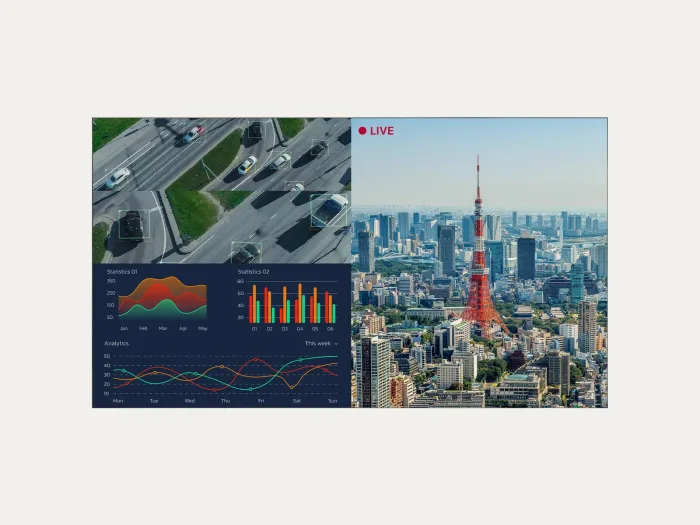
- a lot of text, tables or dashboards are shown
- the budget is limited and the gaps are not a problem
- the surface fits a fixed grid, for example 2 × 2 or 3 × 3 displays
As a rough guide: if nobody stands closer than three to four metres from the surface, the LED wall plays to its strengths. Below two metres, LED needs a very fine pitch, and that is much more expensive per m². Which pitch suits which distance is explained under Viewing distance.
What speaks against it
LED wall: A fine pixel pitch costs a lot. If you only have two metres of distance, you pay considerably more for an LED wall than for an LCD video wall of the same size. An LED wall also needs control, substructure and planning. It is not a device you simply hang up.
LCD video wall: The gaps do not disappear, they only get narrower. A line then runs across a face or a logo. The size is tied to the grid. And behind a sunny window, a normal LCD video wall becomes too dark.
Both: With an LCD video wall too, the displays must be matched to each other. Otherwise one looks brighter or warmer than the others. With both technologies, spare parts that match the existing installation are worthwhile.
Our recommendation
We advise on a brand-independent basis and sell both. If the LCD video wall is the better solution for your case, we will say so. The decision becomes clearest on site: we bring modules with us, and you see image, brightness and distance where the surface will later hang.
Products can be found under Indoor LED wall, Fine-pitch LED and LCD video wall. Everything about buying is under Buy LED wall.